Gufgaaf with Sunil Upreti (Singer) | Nepali Podcast | Deepesh Shrestha
The Nepali music industry is a powerhouse of talent. Since the inception of music, so many artists have made their mark in the listeners’ hearts. Some singers have emerged...
Know for: singer, music composer, lyricist, frontman and lead guitarist of Rhythm
Deepak Bajracharya, a native of Patan, was born on May 2nd. He is known for his remarkable contribution in the Nepali music industry. With a strong and unbreakable love for music, Bajracharya once sacrificed his exams for a recording. He has given a large number of hit songs like “Maya ko Dori Le”, “Jhumi Jhumi”, and “Man Magan”.
Bajracharya has also contributed to a lot of social works and events. One of his newest songs “The Corona Song” was also made to pass courage and a sense of awareness to the people who are afraid of the pandemic. Moreover, his album “Jhumi Jhumi” was also a part of a cancer relief society.

Known as: Deepak Bajracharya
Deepak Bajracharya came from a typical Newar community. Growing up in Bhinchhe Bahal, he struggles with communication as he only knew Newari and a little bit of English. He was shy but after he joined martial arts in school, confidence grew and he could fit in.
Bajracharya always had love and interest in music. His main action began with doing cover songs with his friends. He and his friends were clueless about what efforts made their creation a hit. They decided to sing more songs and also record it. They used to perform in restaurants.
Once, they got an offer for gigs and they would get paid. It was in a restaurant, instead of playing in a practice room, they would perform in the restaurants. They performed there for a month but in the end, a conflict arrised and the restaurant had to shut down.
Then, they got a second offer in another restaurant and they were promised a certain amount. Bajracharya and his band Lituluns decided they would use the pay to do a recording. Unfortunately, with food bills, they had to pay extra.
Then they collected funds from what they had in their pockets and booked a recording in Sang studio. They booked it 2 months earlier. They were practicing really hard but after a month, Bajracharya’s exam routine got published. Unfortunately, his exam and the recording date were on the same day. But Bajracharya did let the boys know about this because he knew they would tell him to prioritize his exams. Bajracharya made a compromise and chose to do the recording instead.
The band had pressure from their parents to quit music and focus on a better career. But they wanted to release atleast one album before quitting. After releasing the first album, the members went their separate ways. Deepak, on the other hand, could not quit music.
After the members went their separate ways, Bajracharya decided he would go solo. He was an all-rounder and had to sing, write lyrics, and compose music all by himself. He names his first solo album “Lituluns 2”. After five years of struggle, he released his second album.
One day, Anita Khadka approached Bajracharya to sing a song that she wrote with the music composition of Raju Singh. The song was “Na Dukheko Man”. Khadka loved it so much that she requested her to do more. Singh had few compositions he had made. Khadka, on the other hand, asked her if it would be a good idea to work together and release an album. Bajracharya asked Singh and he immediately agreed. Raju Singh said that it should be a trend in the Nepali music industry to have people who work on different parts of music such as lyricists, music composers, and singers. The album they made was “Jhumi Jhumi”.
Along with his music, Deepak Bajracharya is a humanitarian and believes in living life as a good human being. Also, he is thoughtful enough to share entertainment through his youtube channel and entertain people in the time of COVID-19 pandemic with a segment called Musical Medicine. He knew people would somehow feel depressed and wanted them to feel better. He also encouraged his daughter Cherisha Bajracharya and made it happen.
With real and raw moments of a rooftop jam with family, he wanted the audiences to feel exclusive. Not every show of Deepak Bajracharya requires money such as going to a concert. Bajracharya wanted his audiences to enjoy his music for free and with easy access. So, he shares his contents on YouTube.
His album “Jhumi Jhumi” was not quite successful in terms of sales compared to “Asar”. But it was massive in terms of distribution. There was a project Bajracharya was a part of where he took initiation as a social ambassador for a cancer relief society. It was the year 2011 and he took a big step towards the betterment of society.
During those days, Kodak was a huge company and with each sale, 2 rupees would go to the cancer relief society. Bajracharya also announced that with each purchase of his album, 1 rupee would be donated. Kodak, as a huge company back in the days, said they would buy 2 lakhs of Bajracharya’s album and distribute it to the cancer relief society.
He has also been the brand ambassador of Bagpiper Whiskey, Kodak Film, Samsung Electronics, Worldlink Communication, and Anna Lifan Motorcycle. He is also working with UNICEF Nepal to help people heal with music.
Deepak Bajracharya lives in Patan with his family. From the hit song “Oh Amira”, he is married to Amira and they have two children. His daughter is Cherisha Bajracharya and his son is Deon Bajracharya.
He is managing Royal Tone Academy with objective of helping other artists and musicians to develops their skills.
Man Magan, Ritu, Wora Para, Jhumi Jhumi, Raati, Maya Ko Dori Le, Oh Amira, Maya ko dori le, Priya, Man Ka Magan, Timi Samu, Aankhama, Bhabiko Lekha, Adharyoma, Maitigharma, Prem Prastab, Mohini, Laila, Dubayo Dubayo, Maruni, Jani Jani, Harpal, Hawa, Samaya, Tmilai, Timi Samu, Timilai BHuleko Chaina, Hela, Priyeshi, Angalo, Jiudai Jiudai, Good Friday, Sunsaan, Nasoor, Ma Nai Ta Ho, Maya Deu, Nasur, Aankha Ko Nani, Yethartha, Dhuwa, Mohani, Naa Naa Naa, Jeevan Ko Bato Ma, Na Dukheko Man, Priye, The Corona Song, Khelauna
NKS UK, Embassy of the Republic of Korea, Hospital of Rehabilitation Center for Disabled Children, Three Star Club (Life Time Award), Manang Family South Korea, NGCCI, The Event Mark (Music Video Award), Lotus Group of Sunakothi, Times FM 90.6 MHz, Dovan Kala Samuha, Lions Club of Kathmandu, Child Work in Nepal Concerned Center (CWIN)
The Nepali music industry is a powerhouse of talent. Since the inception of music, so many artists have made their mark in the listeners’ hearts. Some singers have emerged...
Nepali Music Industry has some best lyricists who poured their hearts out in the songs which we could not resist singing. One such talent is Bijay Shivakotee, whose creations...
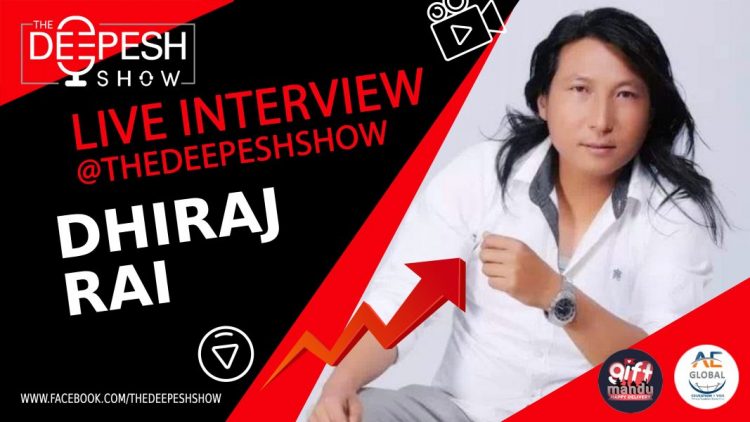
When you hear the name Dhiraj Rai, the first thought that comes to mind is a melodious voice with conventions of pop and rock and the Man behind numerous...
The Nepali music industry is a powerhouse of talent. Since the inception of music, so many artists have made their mark in the listeners’ hearts. Among them, some singers...
Dharmendra Sewan is a Nepali singer, songwriter, composer, and performer. He is known as the voice of his generation and has cemented himself as one of the most prominent...
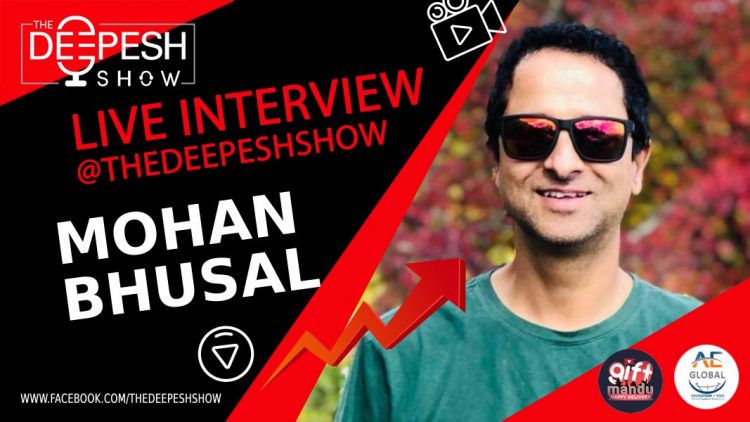
Give Mohan Bushal any song, and he will make it his own with his signature style – he keeps it melodious, effortless, and unhurried. He is gifted with an...
When we listen or sing folk songs, it connects us with the generations who have come before us as well as other cultures from around the world. It keeps...
Nepali Industry has heaps of talented best lyricist who poured the heart out in the songs, express through his pen, putting every emotion on a piece of paper which...
Numerous different skills and attributes must come together to make a good rapper. The most important attribute is to look both for the big “punch” lines and the underlying...